





Please Follow us on Gab, Minds, Telegram, Rumble, GETTR, Truth Social, X, Youtube, Instagram
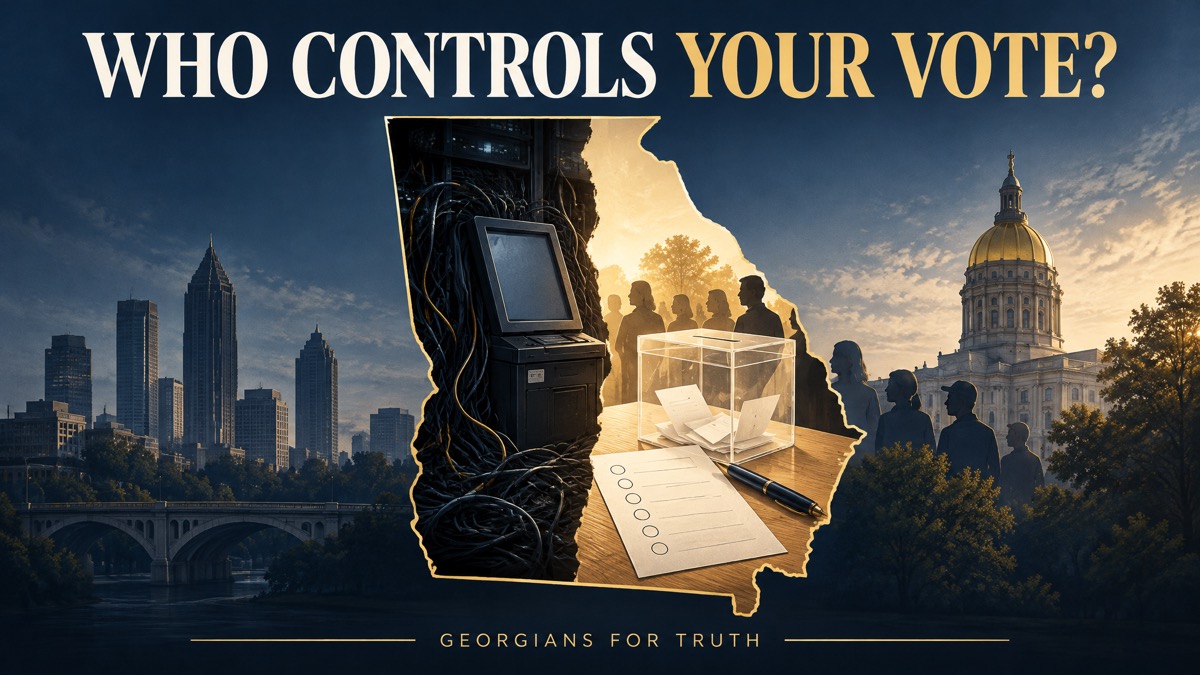
The next Georgia voting system is being pitched by the machine vendors, with Georgia citizens being given only two minutes to speak on the matter, wrote Field Searcy for Georgians for Truth.
Searcy’s field reporting notes that, over months of study by the Joint Election Equipment Study Committee, the process of deciding what to replace Georgia’s voting systems with has developed into a lengthy sales promotion for another expensive and complicated voting machine – mostly presentations by vendors of proprietary electronic voting systems, with simple two-minute citizen presentations the rare exception to the rule of the long presentations by the vendors.
State Election Director Blake Evans gave a historical overview of how Georgia went to electronic voting in 2002. According to Searcy, the same issues have been addressed with more hardware, locked up in software with more licenses and procedures to deal with, with the end result of making it harder to audit, harder to administer, and easier to hide problems with the voting system.
Searcy writes that the committee has yet to draft a simple specification of what Georgia needs in an election system and then have the vendors bid on that. Instead, the terms are being dictated by the vendors of proprietary, locking, black box voting systems. Citizens who came to comment were asked whether they preferred pens, pencils, or pre-filled bubbles, while the vendor pitches shaped the debate.
It’s not hard to spot the time imbalance given to the Bartow County election director, a former president of the Georgia Association of Voter Registration and Election Officials, who was given eight minutes, versus the taxpayers who are paying for the voting system, held to two minutes each. Garland Favorito, co-founder of VoterGA, asked in August to speak and was never put on the committee’s agenda.
Searcy recalled that in 2020 the state committed over $107 million for the current ballot-marking devices, on a twenty-year bond for machines he said were built for about ten years. Counties still pay to store, insure, haul, set up, and test them.
Most of the systems, however, are still designed to and run on the 2005 Voluntary Voting System Guidelines. Of the voting systems reviewed by the Joint Election Equipment Study Committee so far, only two meet the slightly more current standards for voting systems set by the federal government in the 2.0 version of the VVSG (Voluntary Voting System Guidelines). Taiwan, with more than double the population of Georgia, uses hand-marked paper ballots which are then publicly counted at the precinct. Searcy notes that, when Georgians have requested that the committee consider hand-marked paper ballots, the response has been to treat another electronic system as already decided.
According to Article 1, Section 2, Paragraph 1 of the Georgia Constitution, “public officers are the trustees and servants of the people and are at all times amenable to them.” Searcy concludes that Georgians purchased the current system of voting, are currently paying off the debt for that system and are currently paying for failures in the voting systems currently used in the counties of Georgia. A committee that gives out-of-state sellers the floor and citizens two minutes has that relationship backwards.









Get the latest on Georgia delivered straight to your mailbox.